Are Dot to Dot Puzzles Good for Kids? 7 Proven Benefits
As a parent, you've probably handed your child a connect the dots worksheet and wondered: is this actually helping them learn? The answer is yes — and science backs it up. Here are 7 proven benefits of dot to dot puzzles for children.
ConnectTheDotsPrintable Team
Our team includes early childhood educators and activity designers with over 10 years of experience creating educational printables for kids. We research and test every activity we recommend.
In This Article:
1. Improves Fine Motor Skills
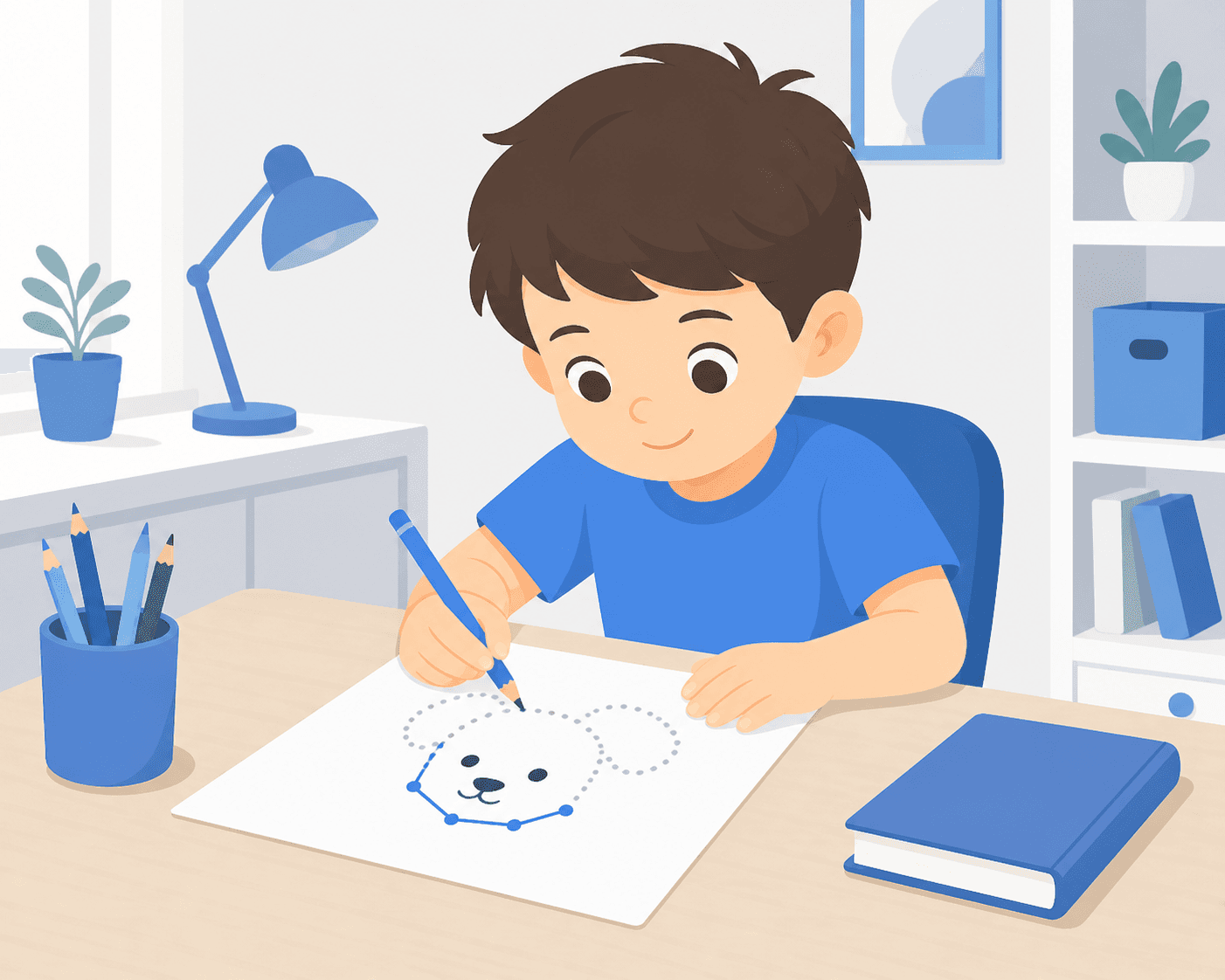
Fine motor skills — the ability to control small muscles in the hands and fingers — are essential for everyday tasks like writing, buttoning clothes, and using utensils. Dot to dot puzzles give children repeated practice gripping a pencil and drawing controlled lines between points.
A 2019 study published in the Journal of Motor Learning and Development found that children aged 3-5 who regularly engaged in connect-the-dots activities showed measurable improvement in pencil grip strength and line accuracy compared to a control group.
Try it: Start with our free connect the dots 1 to 10 printables — perfect for toddlers developing their first pencil grip.
2. Teaches Number Recognition & Sequencing
Every connect the dots puzzle is essentially a counting exercise in disguise. Children must identify each number in order — 1, 2, 3, and so on — and connect them correctly. This repeated practice reinforces number recognition and teaches the fundamental math concept of sequencing.
For toddlers, puzzles with 1-10 dots help master single-digit numbers. As children grow, puzzles with 1-20, 1-50, or even 1-100 dots introduce larger numbers and build counting fluency. This gradual progression aligns with how early childhood educators teach math.
For teachers: Use dot to dot worksheets as a quick warm-up activity before math lessons. They help students transition into number-focused thinking.
3. Builds Hand-Eye Coordination
Hand-eye coordination is the ability to process visual information and respond with controlled hand movements. When a child looks at dot number 5, then moves their pencil to connect it to dot number 6, they're training this critical skill.
Research from the American Occupational Therapy Association highlights that activities requiring sequential visual-motor responses — exactly what dot to dot puzzles provide — are among the most effective ways to develop coordination in young children.
4. Develops Focus & Concentration
In a world of screens and instant gratification, dot to dot puzzles teach children to slow down and focus on a single task. Completing a puzzle requires sustained attention — if a child skips a number or loses their place, the picture won't look right.
This self-correcting nature is powerful. Children learn that paying attention leads to better results, a lesson that transfers to schoolwork and other activities.
5. Boosts Confidence & Self-Esteem
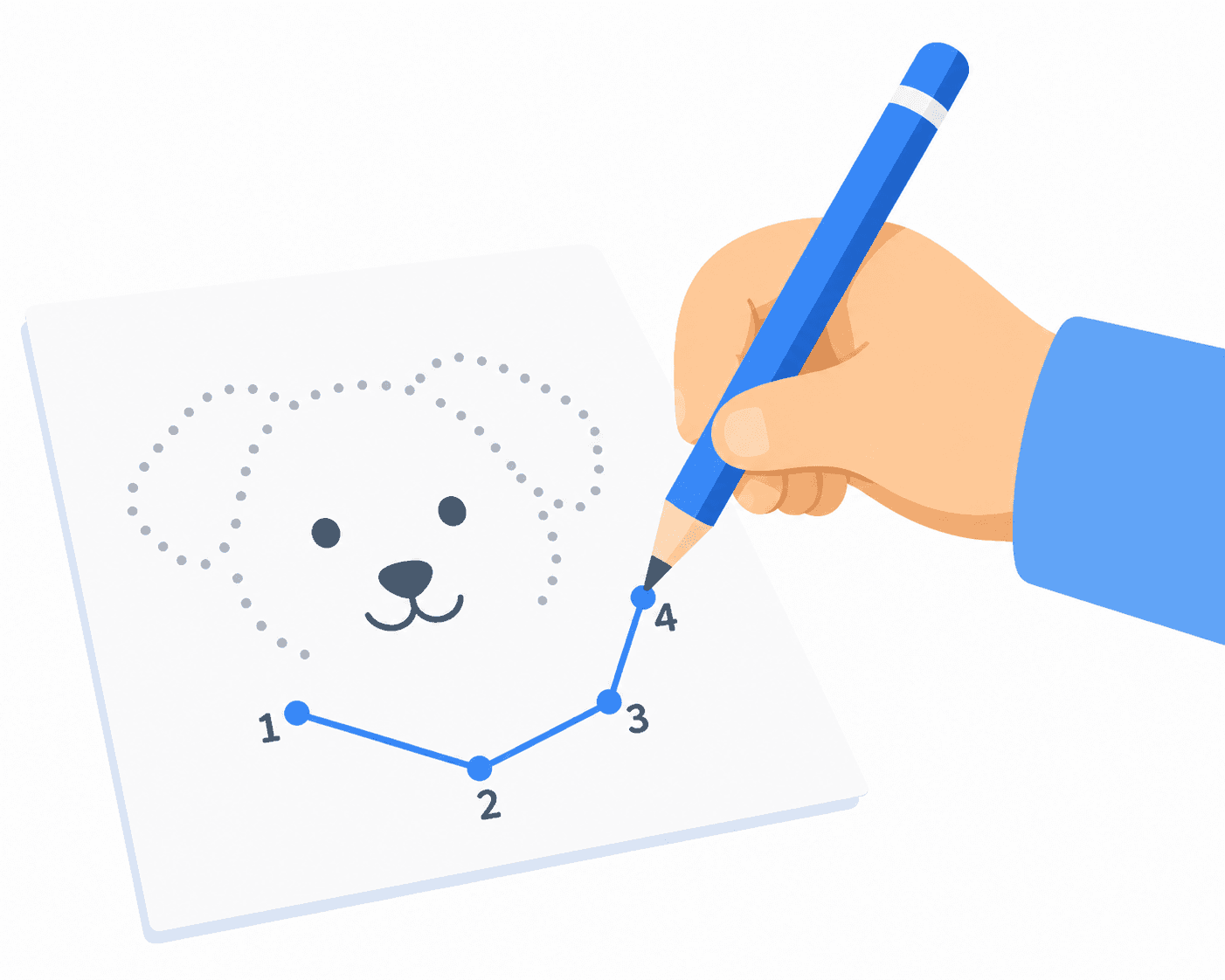
There's a magical moment when a child connects the last dot and sees the complete picture appear. That spark of pride is more than just cute — it's building genuine self-confidence.
Child psychologists call this "mastery experience" — the feeling of successfully completing a challenge. Each finished puzzle tells the child: "I can do hard things." Over time, these small wins build a growth mindset that serves children well beyond puzzle time.
"My 4-year-old daughter asks for dot to dot pages every night before bed. The look on her face when she finishes and shows me the picture — that confidence is worth everything."— Parent review
6. Introduces Shapes & Spatial Awareness
As dots connect, shapes emerge — curves become animal outlines, straight lines form houses, and angles create stars. Children begin to understand how individual points combine to create recognizable forms. This is spatial awareness in action.
Spatial reasoning is a predictor of success in STEM fields later in life. Early exposure to activities that require understanding shapes and positions — like dot to dot puzzles — gives children a head start in geometry, engineering, and even art.
7. Prepares Kids for Writing
Before children can write letters, they need to master the basic strokes — straight lines, curves, and angles. Dot to dot puzzles practice all of these movements in a fun, low-pressure context.
Occupational therapists often recommend connect the dots activities as a pre-writing exercise. The act of drawing a line from one point to another mirrors the strokes used in letter formation. Children who practice with dot to dot puzzles often transition to writing more easily.
Pre-writing tip: Choose puzzles with curved lines (like animals) to practice the strokes needed for letters like S, C, and O.
Dot to Dot by Age: What to Choose
Ages 7-10 (School Age)
50-200 dots, complex designs, detailed images
Browse medium & hard printables →The Bottom Line
Dot to dot puzzles are far more than just a way to keep kids quiet for 10 minutes. They build real skills — motor control, number sense, focus, and confidence — that prepare children for school and beyond. And the best part? Kids genuinely enjoy them.
Whether you're a parent looking for screen-free activities or a teacher planning classroom worksheets, connect the dots puzzles are a proven, affordable, and effective tool for child development.
Ready to try them? Browse our collection of free printable connect the dots worksheets or use our custom generator to create your own.
Download Free Dot to Dot Printables
Get started with our free collection — easy, medium, and hard worksheets for all ages. No sign-up, no watermarks, instant PDF download.
Browse Free Printables